
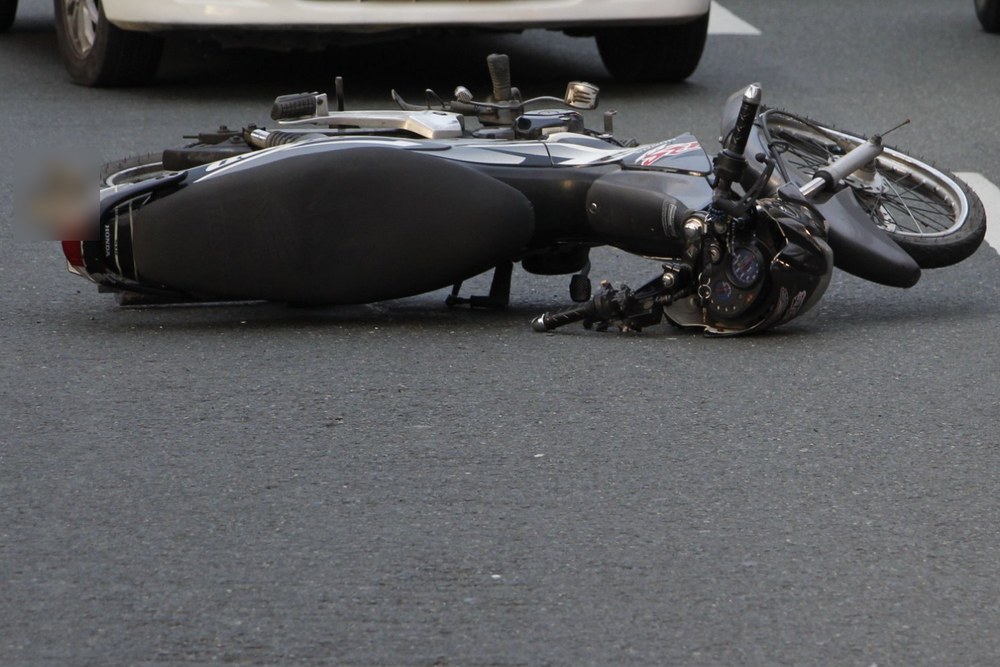
What Makes Mississippi Motorcycle Accident Claims Different From a Regular Car Wreck
The law that decides fault is the same. Almost everything else is harder. A Mississippi motorcycle claim differs from a car wreck in four specific ways: the injuries are far more severe, so the at-fault driver’s minimum policy usually cannot cover them; the state’s universal helmet law gives insurers a damages argument no car case has; juror attitudes toward riders are a real factor in valuation; and Mississippi leads the nation in uninsured drivers, which means your own coverage is often the policy that actually pays.
Pure comparative negligence still applies, the three-year deadline still applies, and the damages caps still apply. The difference is in how insurers attack the claim and how much money is realistically available.
Does Mississippi’s Helmet Law Affect Your Claim?
It can affect your damages, but it does not bar your claim. Mississippi has required helmets for every rider and passenger since 1974. Under Miss. Code § 63-7-64, operating or riding on a motorcycle or motor scooter on a public road without a crash helmet meeting the federal safety standard is unlawful, regardless of age or experience. Mississippi is one of a minority of states with a universal requirement rather than an age-based one.
A violation is a traffic offense with a modest fine. It is not a finding of fault for the crash, and it does not disqualify you from recovering.
What it gives the insurer is an argument about the extent of your injuries. Expect them to claim that a head injury would have been less severe with a helmet, and to use that to push fault percentage onto you under comparative negligence. The argument is limited in an important way: it has no bearing on injuries a helmet would not have prevented. A broken femur, a shattered pelvis, or road rash across your arm is not a helmet injury, and the defense is not entitled to discount those.
If you were wearing a helmet, say so early and document it, because that forecloses the argument entirely.
How Does Fault Work in a Mississippi Motorcycle Case?
Mississippi follows pure comparative negligence under Miss. Code § 11-7-15. Your damages are reduced by your percentage of fault, and you are only barred from recovery if you are found 100 percent at fault. There is no 50 percent cutoff, which is more forgiving than most states.
That rule is the same for cars. What differs is how aggressively it gets used against riders. Expect the insurer to argue some combination of:
- You were speeding, or lane splitting, or riding aggressively
- You were hard to see, with the implication that this is somehow your doing
- You could have avoided the collision with better reaction time
- You were not wearing a helmet, or not wearing protective gear
- Your bike was modified
Several of these are about image rather than causation. The most common motorcycle crash scenario is a driver turning left across a rider’s path or pulling out from a side street, and in those cases the driver’s failure to yield is the cause regardless of what the rider was wearing.
Why the At-Fault Driver’s Insurance Usually Is Not Enough
This is the practical difference that shapes most Mississippi motorcycle claims.
Mississippi’s minimum liability limits are 25/50/25: $25,000 per person and $50,000 per crash for bodily injury, plus $25,000 for property damage. Those limits apply to motorcycles the same as cars, and they have been unchanged since January 2006.
Now compare that to a motorcycle injury. A rider has no cage, no airbags, and no seatbelt. A single helicopter transport, an ICU stay, and one orthopedic surgery can exceed $25,000 before rehabilitation starts. In a car wreck, minimum limits frequently cover the claim. In a motorcycle wreck, they frequently do not come close.
Mississippi also has the highest uninsured driver rate in the country, with industry estimates around 28 percent. So the realistic question in many cases is not what the claim is worth but what can actually be collected.
That makes your own coverage central:
- Uninsured and underinsured motorist coverage is often the policy that pays. Mississippi insurers must offer it, though a named insured can reject it in writing, so check whether you have it.
- Confirm the bike has its own policy. Riders sometimes assume an auto policy extends to a motorcycle. It generally does not.
- Look for additional defendants, such as a commercial employer, a vehicle owner, a road contractor, or a parts manufacturer, each of whom may carry separate coverage.
What Damages Can You Recover, and What Is Capped?
The same framework applies as in any Mississippi injury claim:
- Economic damages such as medical bills, future care, lost wages, lost earning capacity, and property damage are not capped
- Non-economic damages such as pain and suffering, disfigurement, and loss of enjoyment of life are capped at $1,000,000 in most cases under Miss. Code § 11-1-60
- Punitive damages require clear and convincing evidence of actual malice, gross negligence, or fraud, and are capped on a sliding scale tied to the defendant’s net worth under Miss. Code § 11-1-65
- Claims against a government entity are capped at $500,000 under the Mississippi Tort Claims Act, with a one-year deadline and a required pre-suit notice
Disfigurement and permanent impairment deserve particular attention in motorcycle cases. Severe road rash, scarring, and amputation carry non-economic value that a soft tissue car claim never reaches, and that part of the claim is often undervalued in early offers.
How Long Do You Have to File?
Generally three years from the date of the crash under Miss. Code § 15-1-49. Two exceptions change the math: a claim against a city, county, or state entity must be brought within one year under the Mississippi Tort Claims Act, with written notice served on the entity’s chief executive officer at least 90 days before filing, and a wrongful death claim runs from the date of death.
Road defect and signage cases often involve a government defendant, so if the crash involved road conditions, treat the one-year clock as the operative deadline.
What to Do After a Mississippi Motorcycle Crash
- Get medical care immediately and follow through. Adrenaline masks injuries, and treatment gaps are the first thing an adjuster uses to discount a claim.
- Photograph everything, including both vehicles, the road, sight lines from the driver’s position, your gear, and your injuries as they heal.
- Preserve the bike and your helmet. Do not repair or dispose of either. Damage patterns are evidence, and an impacted helmet is proof you wore one.
- Get the crash report number and request your copy from the Mississippi Department of Public Safety.
- Collect witness information at the scene.
- Notify your own insurer and confirm whether you carry uninsured and underinsured motorist coverage.
- Do not give a recorded statement to the other driver’s insurer before getting advice.
- Stay off social media about the crash and your activities.
Frequently Asked Questions
Can I recover if I was not wearing a helmet?
Yes. Mississippi treats helmet non-use as a traffic violation, not a bar to recovery. Insurers will argue it increased your head injuries, which can reduce damages, but it does not apply to injuries a helmet would not have prevented.
Does Mississippi require motorcycle insurance?
Yes. The same 25/50/25 minimum liability limits that apply to cars apply to motorcycles. Uninsured motorist coverage is not part of that minimum, though insurers must offer it.
What if the driver who hit me has no insurance?
Your own uninsured motorist coverage becomes the primary source of recovery. Mississippi has the highest uninsured driver rate in the country, so this is a routine scenario rather than an unusual one.
Is there a cap on motorcycle accident damages?
Non-economic damages are capped at $1,000,000 in most cases. Medical bills, lost income, and other economic damages are not capped.
How long do I have to file in Mississippi?
Generally three years from the crash. Claims against a government entity carry a one-year deadline plus a 90-day pre-suit notice requirement.
Find Out What Coverage Is Actually Available
On a motorcycle claim, the early question is not what your case is worth. It is where the money is going to come from, because minimum limits rarely stretch to cover a serious rider injury and roughly one in four Mississippi drivers carries no insurance at all. Get your treatment documented, keep the bike and the helmet, pull the crash report, and find out what your own uninsured and underinsured coverage will do. If you were hurt riding in Mississippi, our Mississippi personal injury lawyer can review the available policies before you give a recorded statement or accept an offer. You can also read what to expect on timing in our post on how long a personal injury settlement actually takes in Mississippi.
This article is general legal information, not legal advice. Fault, damages, and deadlines depend on the specific facts of your case.
Author Bio

Daniel Ware is CEO and Managing Partner of Ware Law Firm, a consumer protection law firm in Magee, MS. With more than 25 years of experience practicing law, he has zealously represented clients in a wide range of legal matters, including identity theft, lemon law, debt collection, and other consumer protection matters.
Daniel received his Juris Doctor from the University of Mississippi School of Law and is a member of the Mississippi Trial Lawyers Association. He has received numerous accolades for his work, including being named among The National Top 100 Trial Lawyers.